The people behind the treehouse

About us.

Knowing what good leadership looks like is one thing. Doing it under pressure is a completely different skill — and it's the part we work on.

The practice gap

Most leaders have a sense of what good leadership looks like. Doing it under pressure is a completely different thing.

Most can articulate it clearly enough. They've read the books, done the courses, sat through the workshops. They've got the frameworks. They might even have the certificate.

And then the moment arrives — the conversation that's been on hold for three weeks, the decision that keeps getting deferred, the pattern everyone can see and nobody names — and the thing that needed to happen doesn't happen. Not because anyone's not trying. Because knowing what to do and actually doing it when it's hard are not the same skill. Most leadership development only teaches the first one. Quietly, expensively, and with great feedback forms.

That's the part we work on.

You might be thinking this

The thoughts that keep showing up.

About you
  • "The training hasn't worked. Maybe I'm just not cut out for this."
  • "I've tried to change this pattern. I keep reverting. Maybe this is just who I am."
  • "I need to do more courses, read more, understand this better."
About your team
  • "I think some of my leaders have reached their ceiling."
  • "We've invested in this team. I'm not sure they want to grow."
  • "I'm starting to wonder if we hired the wrong people."
Here's what's actually going on

None of these are true.

Or at least, they're not the real explanation. What looks like a ceiling is almost always a practice gap. What looks like resistance is usually a response to development that wasn't relevant or challenging enough to be worth showing up for. What feels like a fixed personality trait is almost always a behaviour that's never had the right conditions to shift.

And the instinct to do more courses, read more, understand better — not wrong, just not sufficient. You already know enough. What's missing is somewhere to try things, get them wrong, and find out what actually works when it matters.

The gap isn't in your people. It's in how leadership development has been designed. And that's not anyone's fault — it's just how the industry got built.

What changes

One thing that was stuck gets unstuck.

The first thing most people notice is the conversation they've been putting off. It happens. And it goes better than they expected.

That's usually how it starts. What follows is harder to point to and more significant. Leaders start catching themselves in old patterns in real time. Not six months later in a performance review. In the meeting, while it's happening. And increasingly, they find they can make a different choice.

The meetings they used to manage from a distance, they start to be present in. The decisions that used to require them in the room, the team starts making without them. The low-level tension of knowing something needs to happen and not doing it — that quiets down.

Leadership stops feeling like a performance they have to keep up. It starts feeling like something they're actually doing.

We won't give you a list of statistics. What we can tell you is the pattern we see, again and again, across the teams we work with: the thing that was stuck gets unstuck. The team that wasn't moving as one starts to. The leader who felt like they were holding everything together starts feeling like they're building something.

And the gap — the one between the leader they knew they could be and the one who showed up to work every day — gets smaller.

The team

Meet the team

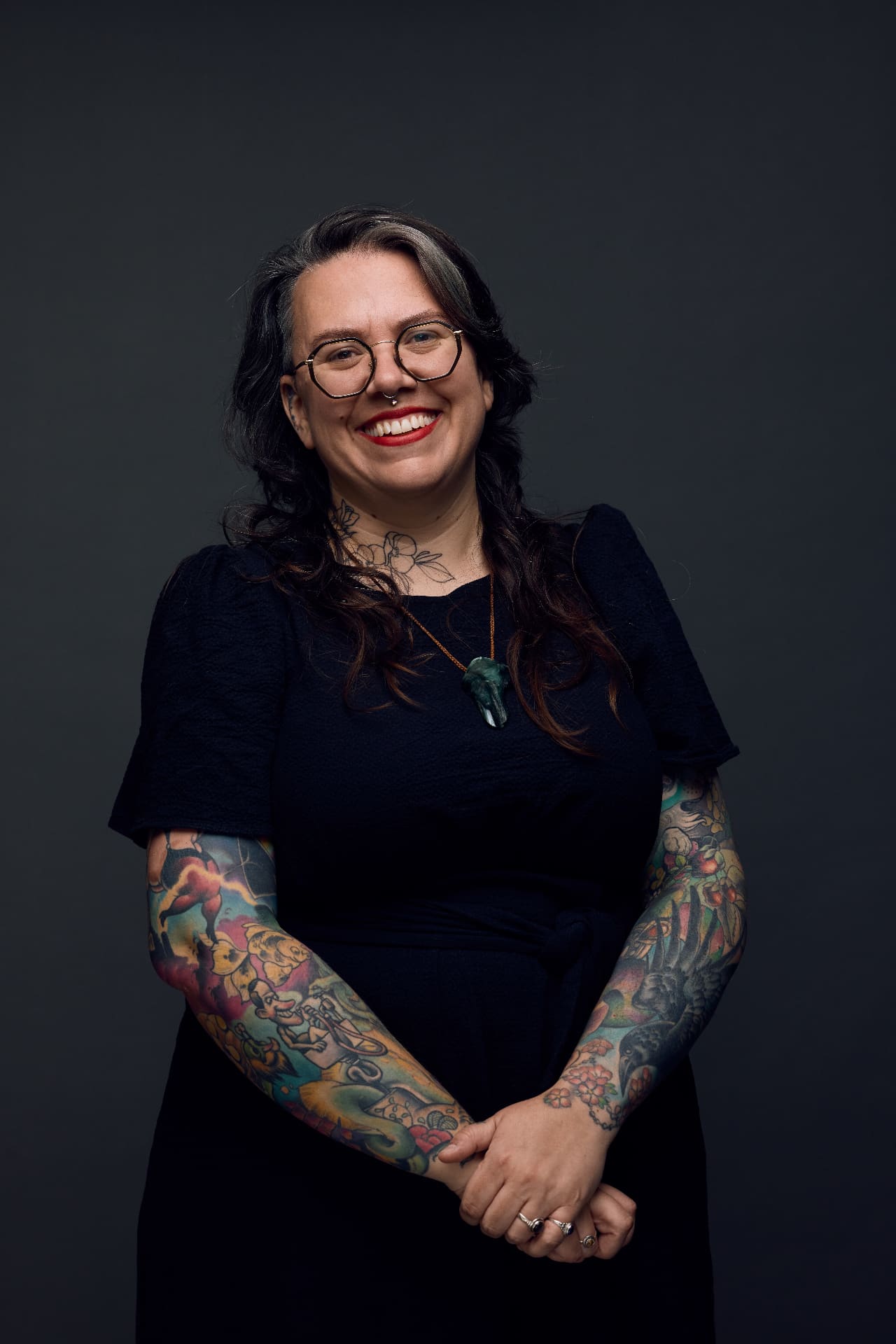
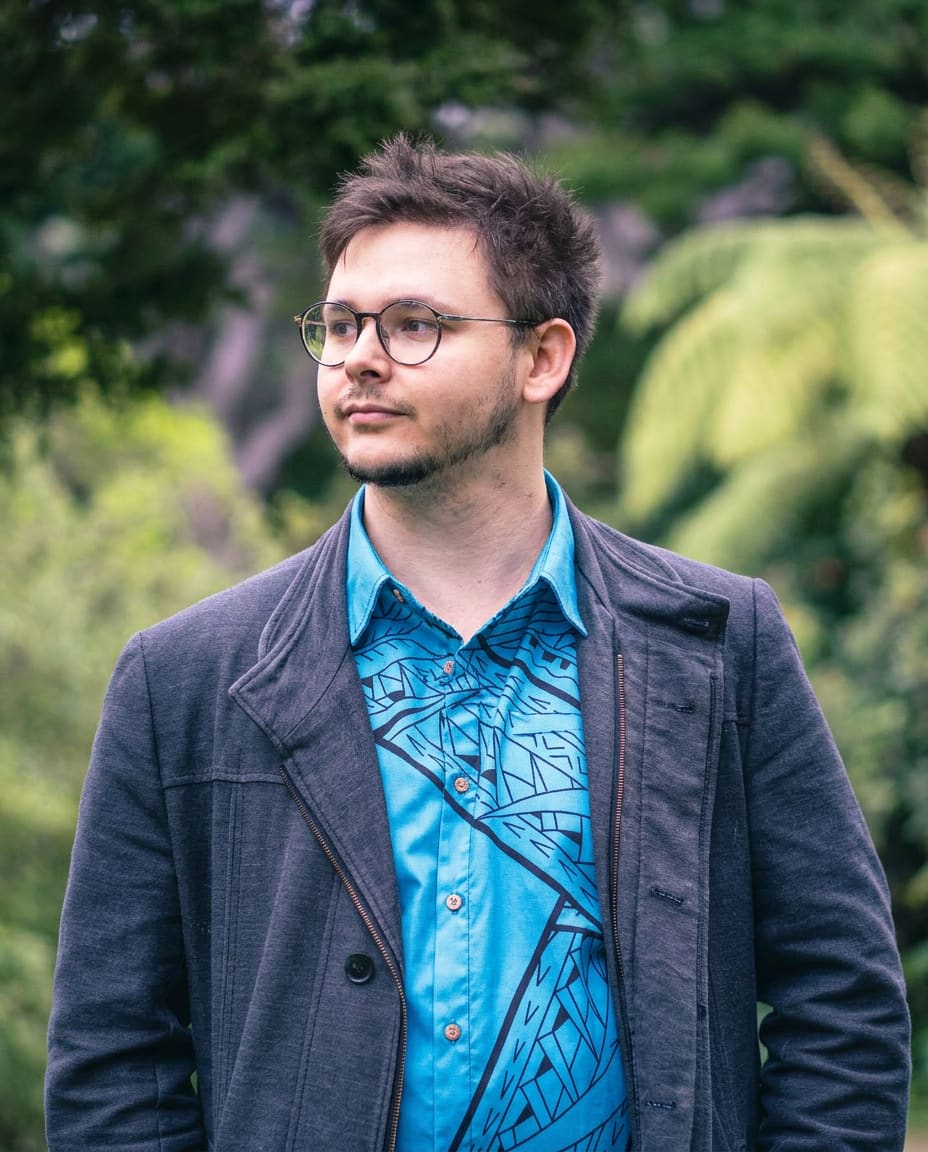
Portrait of Tamara Buckland

Tamara Buckland

Founder & Leadership Facilitator

Tamara has spent over a decade working with leaders across New Zealand and Australia. Previously Head of People Experience at Sharesies, with earlier stints at Wētā Digital and SilverStripe, they've worked at the intersection of people, culture and organisational change across tech, creative and growth-stage environments.

They founded Leadership Treehouse because they kept seeing the same gap - leaders who knew what good leadership looked like, but had nowhere to practise it. So they built one.

When Tamara isn't running sessions or designing new ones, they're probably writing about leadership development on LinkedIn, talking to a founder over coffee, or being defeated at chess by their kid.
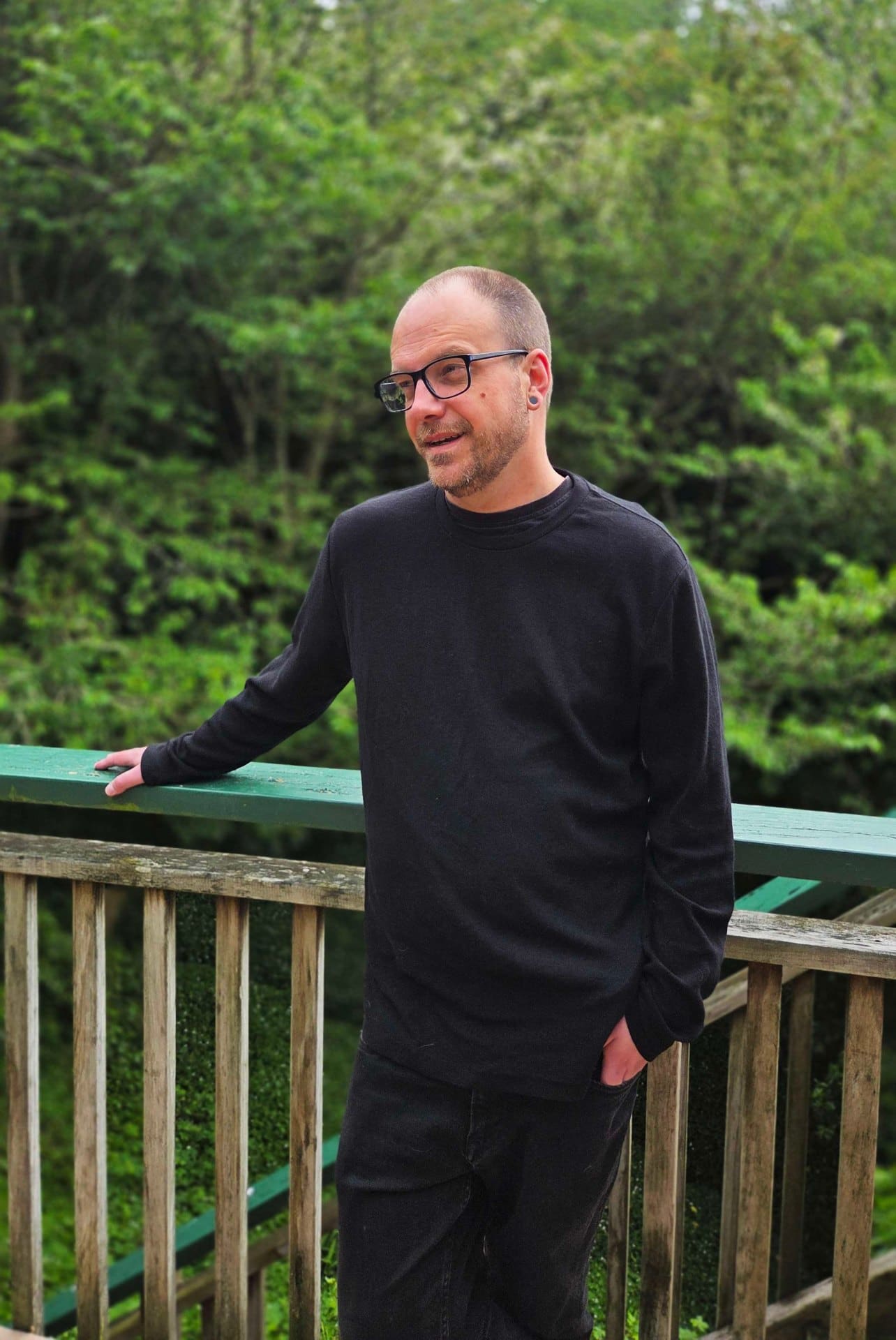
Portrait of William Bennett

William Bennett

Game Designer & Lead Storyteller

William is a master Game Facilitator with many years of experience guiding people through rich, unpredictable role-playing adventures. He has a sharp eye for story and a gift for reading the room - he creates worlds that feel alive, and then invites you to shape them.

As co-designer and lead storyteller of our original game A Quest Within, William brings depth, humour and just the right amount of danger to every session.

His favourite part? Being surprised. He thrives on the unexpected choices people make and loves adapting the story in real time to mirror their leadership challenges and spark fresh insight. He sees every session as a collaborative story - not one he tells to you, but one he helps you discover.

Portrait of Greig Roulston

Greig Roulston

Concept Artist & Illustrator

Greig is a Concept Artist, Illustrator and Designer based in Wellington. He's been drawing characters and creatures since childhood and has a lifelong passion for gaming - both tabletop and video. Fifteen-plus years of experience working on design and imaging projects sit behind the work you see in our sessions.

Before moving to freelance, Greig was lead artist on a digital interactive comic book project, where he developed both the art pipeline and the interactive viewer that brought it to life. Before that, several years among New Zealand's documentary taonga at the National Library of New Zealand, while tinkering in his garage building arcade machines, racing drones, building guitar effects pedals, war gaming terrain and (yes) stormtrooper armour.

See more of his work on Instagram or Artstation.

The story

Why this exists.

Leadership Treehouse exists because Tamara Buckland kept seeing the same problem.

After more than a decade working with leaders across New Zealand and Australia - in-house, as a fractional Chief People Officer, and as a facilitator - the pattern was always the same. Smart, capable leaders who knew what good leadership looked like in theory, but had never had anywhere safe to actually practise it. They'd been to the workshops. They'd read the books. They had the frameworks. And then on Tuesday afternoon they'd freeze in the conversation that mattered.

The leadership development industry, for the most part, was making the problem worse: more frameworks, more slides, more good intentions, less actual change.

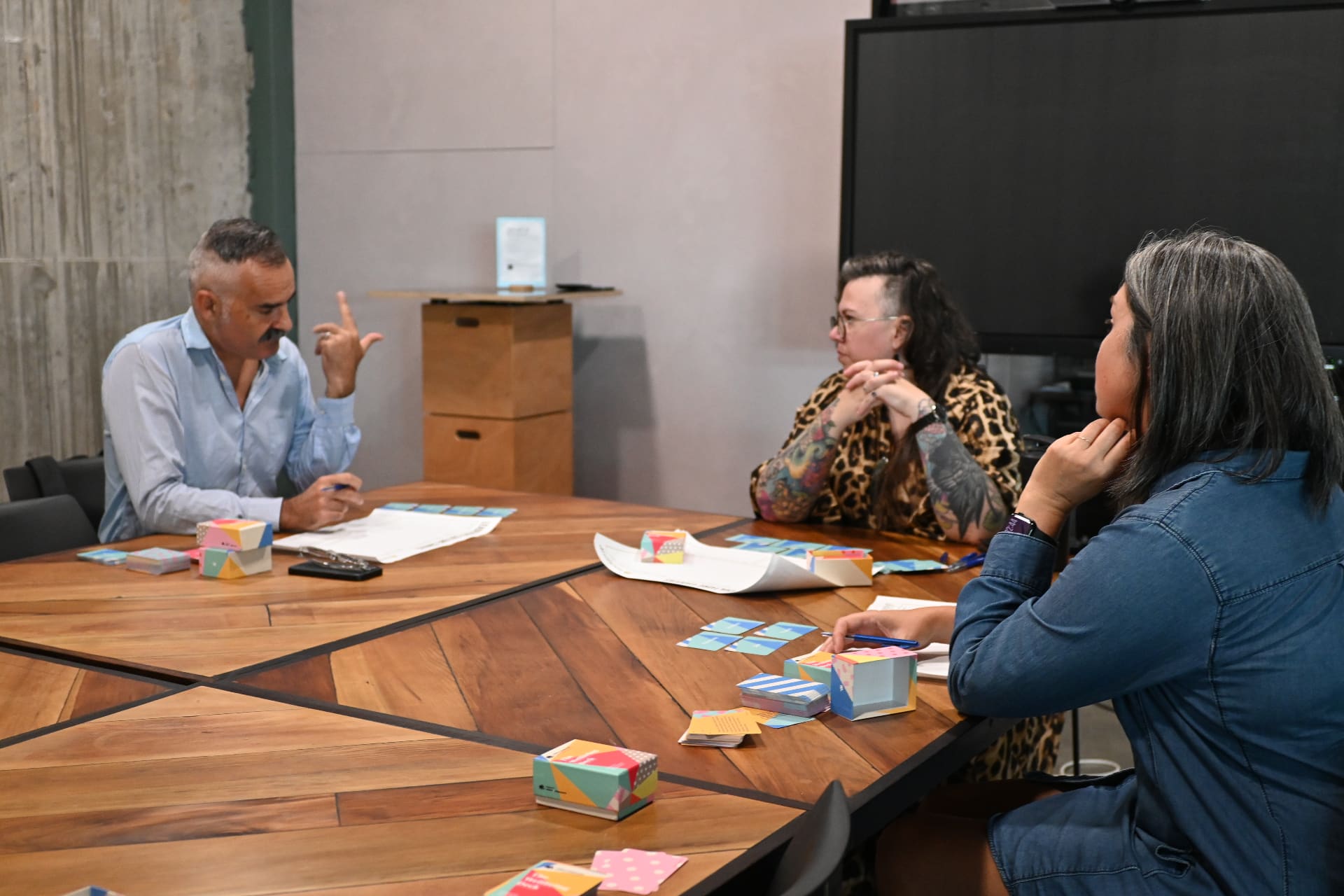
So Tamara built somewhere different. Leadership Treehouse runs immersive, story-driven scenarios where leaders practise the hard stuff inside a fictional world, and then debrief their way back to real life. The format isn't a gimmick - it's the mechanism. People learn what they live, not what they're told.

Five years in, we work with leadership teams across tech, creative, professional services, government, education and a surprising number of farmers. Wherever there's a team trying to lead other people through something hard, we'll generally be useful.

What we believe

How we work

Less a values poster, more a working agreement. Five things you can hold us to.

  1. 01

    We'd rather be useful than impressive

    We'll tell you when something isn't the right fit, when a smaller piece of work would serve you better, or when we're not the right people for the job. The point is your team getting better, not us looking clever.

  2. 02

    We design for the real version of you

    We're not interested in the professional version of you - the one with the right answers and the polished delivery. We design for the real one. The one who's still figuring it out, who sometimes says the wrong thing, and who leads better when they stop performing and start engaging.

  3. 03

    We honour scepticism

    Some of our best work has been with leaders who walked in convinced this was nonsense. We'd rather you arrive sceptical than performatively enthusiastic. Sceptical thinking is what good leadership is made of.

  4. 04

    We take confidentiality seriously

    What happens in a Leadership Treehouse session stays in that session. We don't use client names without explicit permission. Some of our best case studies aren't public, and never will be. That's the deal.

  5. 05

    We commit to play and keep innovating

    We treat play as a serious method, not a gimmick, and we're never done refining it. Every programme we run teaches us something we fold into the next one. New scenarios, new debriefs, new ways to make the learning stick. If we ever start running the same session on autopilot, we've drifted from why this exists.

Want to talk?

Want to talk?
Let's talk.

We do free 20-minute discovery calls. Tell us what's going on with your leadership team and we'll be straight with you about whether what we do is right for you.

Book a discovery call

No pitch deck. No "let's circle back." Promise.